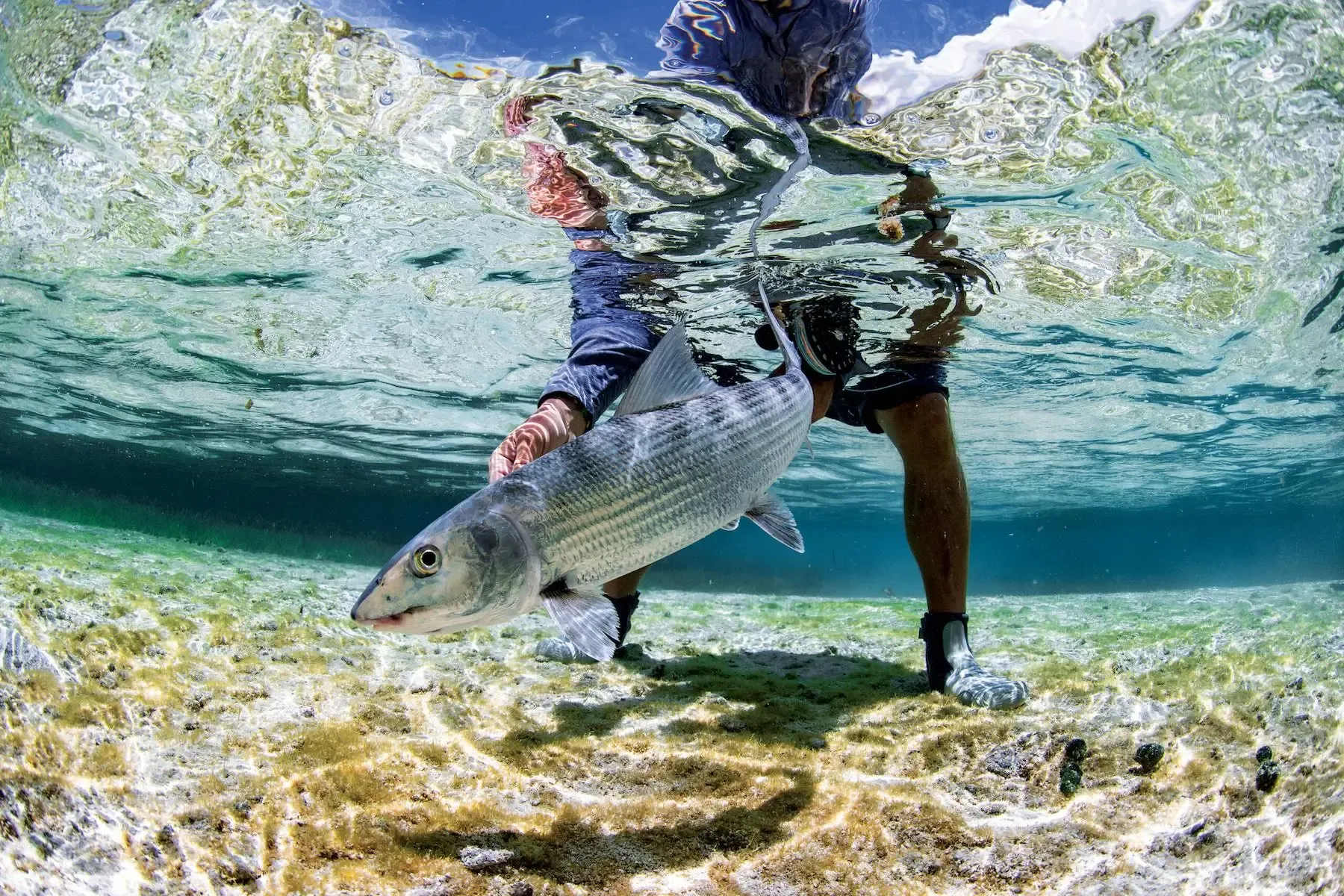
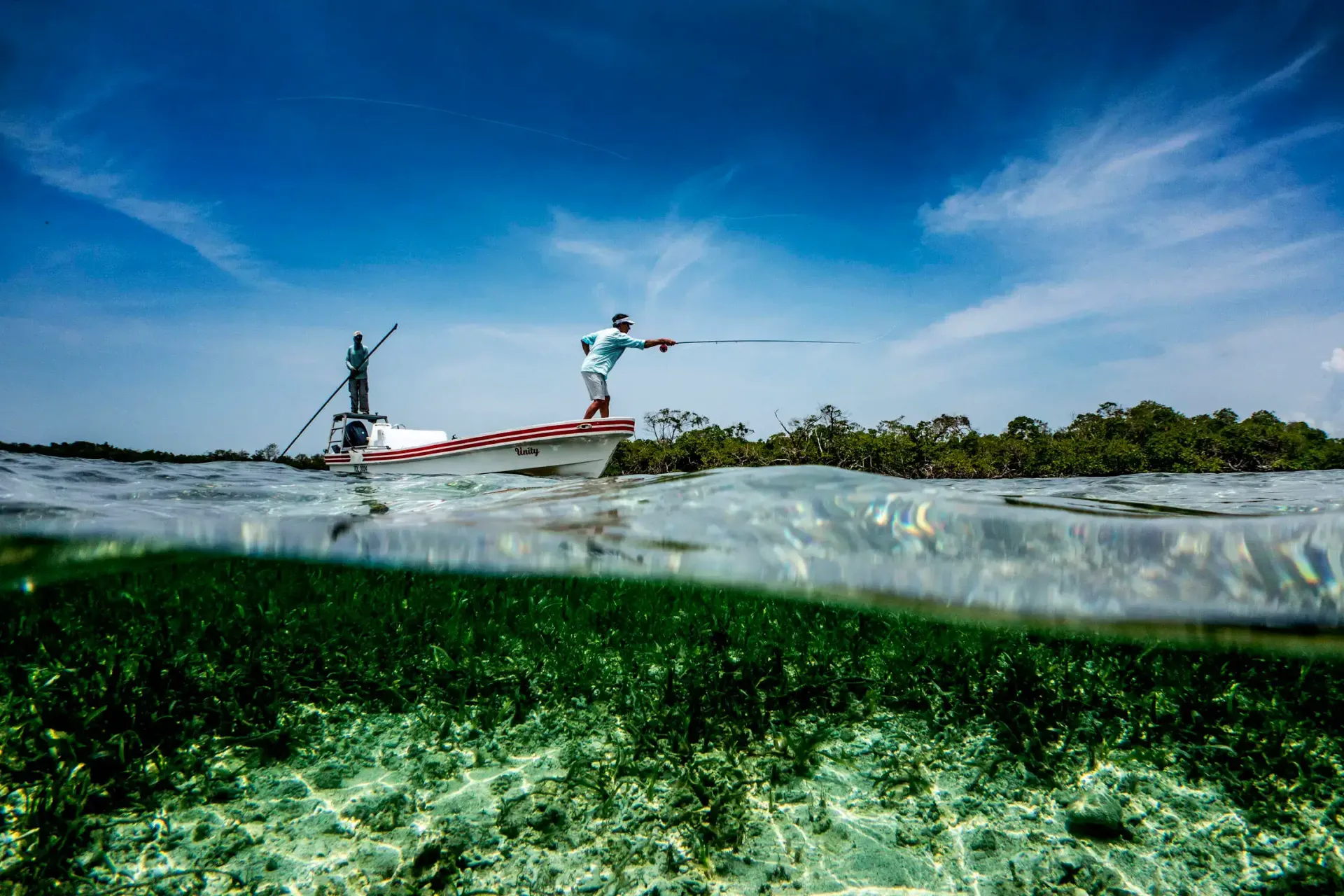
Fly angler wading the northwest flats in Roatan Honduras casting for bonefish in clear shallow water

Fly Fishing in Roatan

Bonefish, permit, and tarpon on the northwest flats. Guided trips with a Grand Slam opportunity out of West End.

Book a Flats Trip

The Grand Slam

Landing bonefish, permit, and tarpon on fly in a single day is what anglers call a Grand Slam. It is the benchmark most serious saltwater fly fishermen measure a destination by, and Roatan's northwest flats hold all three species in the same water system.

A Grand Slam anywhere in the world is a hard day of fishing. What Roatan offers is access to all three species without changing locations: bonefish on the hard sand flats, permit moving with the tide across turtle grass, tarpon in the mangrove edges and tidal channels within a short run of the dock.

The Northwest Flats

The question most fly anglers ask before a Roatan trip is which part of the island to fish. The northwest flats, accessible from West End in a short boat run, are a mix of hard white sand bottom and turtle grass. The kind of structure that holds bonefish year-round and draws permit on a moving tide. Visibility in the water column is good enough to spot tailing fish from a distance.

Most Caribbean fly anglers go to Belize. Roatan gets a fraction of that traffic. The northwest flats rarely see more than one other boat, if any. For sight fishing, that difference is not marginal. See the full fishing offer at Roatan for what else is available from the same base.

Roatan northwest flats at low tide, clear shallow turquoise water over white sand and turtle grass

Species on the Flats

Three species define the flats trip. Their seasons overlap enough to make a Grand Slam attempt realistic, and each demands a different presentation and a different level of patience.

Bonefish

The most consistent species on the flat and the most accessible entry point into saltwater fly fishing. Roatan's bonefish average 2 to 4 lbs with larger fish present in the right conditions. They tail actively on hard sand and respond to a crab or shrimp pattern landed ahead of the fish and stripped with short, controlled pulls.

Year-round · Peak Oct – Apr
Permit

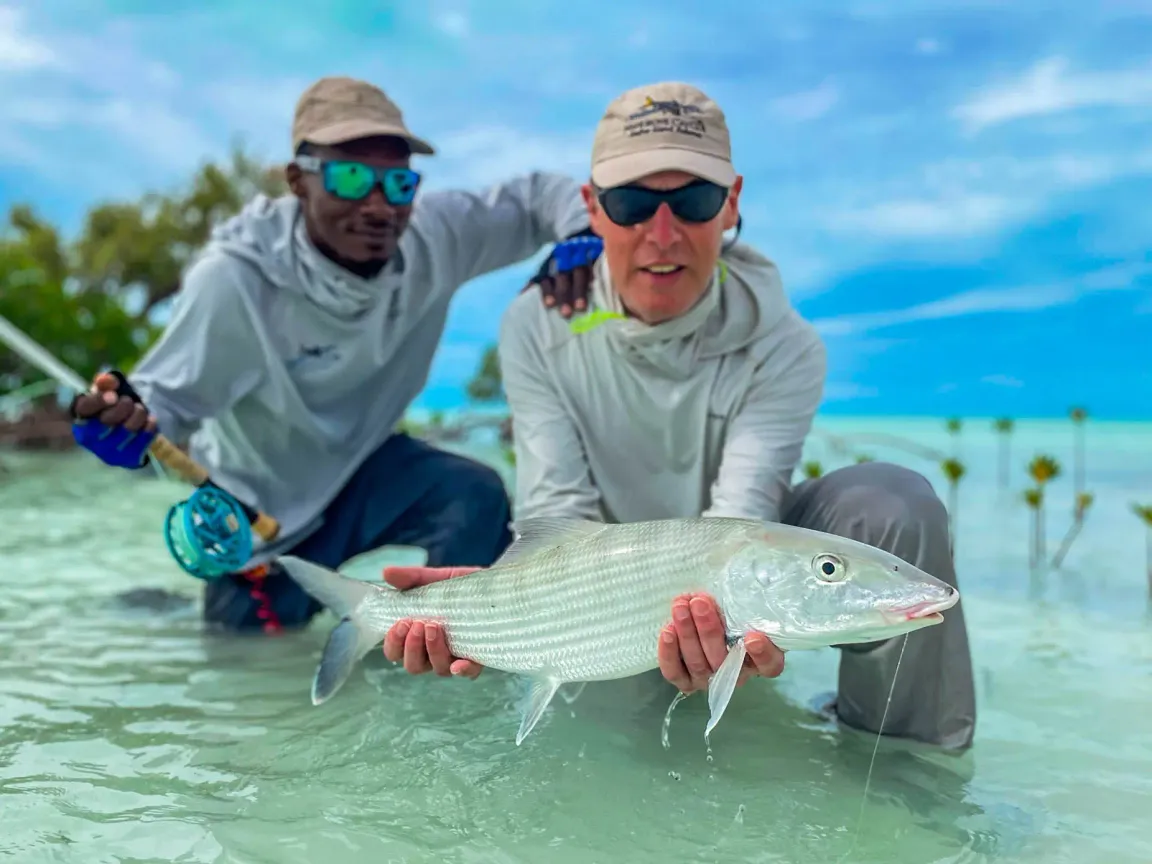
Permit are the reason experienced fly anglers make dedicated flats trips. They are selective, easily spooked, and refuse more presentations than they take. On Roatan's northwest flats, permit are most reliably found working the turtle grass edges on an incoming tide. When one eats and you land it, the difficulty is the point.

Peak Nov – Apr

Tarpon

Roatan holds juvenile and adult tarpon in the mangrove edges and tidal channels along the northwest coast. Fish in the 10 to 40 lb range are the primary flats target; larger tarpon move through the cuts and deeper channels. They take streamers aggressively when conditions are right and jump immediately on a tight line.

Peak Apr – Aug

Fly angler releasing a permit caught on fly on the flats in Roatan Honduras

What's Included

Every guided flats trip is fully equipped. There is no gear to source or transport.

Included Detail
Fly rods 8-weight for bonefish, 9-weight for permit and tarpon, rigged and ready at the dock
Flies Crab patterns, shrimp patterns, tarpon streamers in proven sizes
Guide & transportation Pickup from West End; 12 years guiding Roatan's northwest flats
Catch-and-release All flats species are released

Bring: sunscreen, a full-brim hat, light long-sleeve clothing, and your own reel if you have a preferred setup. The sun on the flats is direct and unbroken all day.

What Anglers Say

★★★★★  100+ reviews

"The flats around Roatan are incredible for fly fishing. We spent the morning stalking bonefish in crystal clear water and the guide was outstanding at spotting fish I never would have seen on my own. Quiet, technical fishing with amazing scenery all around. Exactly what I was looking for."

Ethan Bradley

Charleston, South Carolina, USA

"I've fly fished for years and was surprised by how untouched some of these areas felt. The guide understood both local conditions and fly presentation extremely well. I landed my first permit here after losing two earlier in the trip. Worth every second."

Marcus Lindberg

Stockholm, Sweden

"This was my first saltwater fly fishing experience and I was nervous about being completely inexperienced. The guide made the learning process easy and encouraging. By the end of the day I was casting confidently and landed several bonefish. A very authentic experience away from the crowded tourist spots."

Emily Foster

Auckland, New Zealand

Book a Flats Trip

Tell us your target species and available dates. We'll confirm what's in the water and match you to the right session.

FAQ — Fly Fishing in Roatan

Is there fly fishing in Roatan?
Yes. The northwest flats hold bonefish, permit, and tarpon within a short boat run of West End. The fishing sees far less pressure than established Caribbean fly fishing destinations, and guided full-day trips are available for all skill levels. Experienced anglers can structure a session around a Grand Slam attempt. First-time saltwater fly fishers can expect to land bonefish by the end of the day with a guide who knows how to read the flat. Anglers looking to combine the two can pair a flats day with one of the deep sea fishing charters out of West End.
What is the holy grail of fly fishing?
In saltwater fly fishing, the answer is almost always permit. The fish is notoriously difficult to fool on fly: it feeds selectively, spooks from a bad presentation, and refuses far more often than it takes. Some fly anglers spend years chasing their first confirmed permit on fly. The broader benchmark, recognised by the IGFA, is the Grand Slam: bonefish, permit, and tarpon in a single day. Achieving one requires the right flat, the right tidal window, and a guide who knows where each species holds when conditions shift.
What is the 80/20 rule in fishing?
The rule holds that 80% of fish are caught by 20% of anglers, or equivalently, 80% of fish come from 20% of the water. On a saltwater flat, the ratio is probably sharper. A bonefish spooked by a bad cast is gone. A permit that sees the fly land wrong won't return. The anglers who land fish consistently are the ones who read nervous water, identify feeding lanes, and understand how tidal movement shifts fish position through the day. It is the argument for fishing with a guide who knows the specific flat.
What to avoid in Roatan?
For a fly fishing trip: avoid September and October if your schedule has no flexibility. Peak Caribbean hurricane season can make flat conditions unfishable for days at a time. Avoid booking with an operator who cannot name the specific flats they fish or describe what species are in the water by month. On the flat itself, avoid rushing the cast on a sighted fish. Patience and accurate placement matter more than distance. If you're combining fly fishing with offshore, plan them on separate days rather than compressing both into one session.