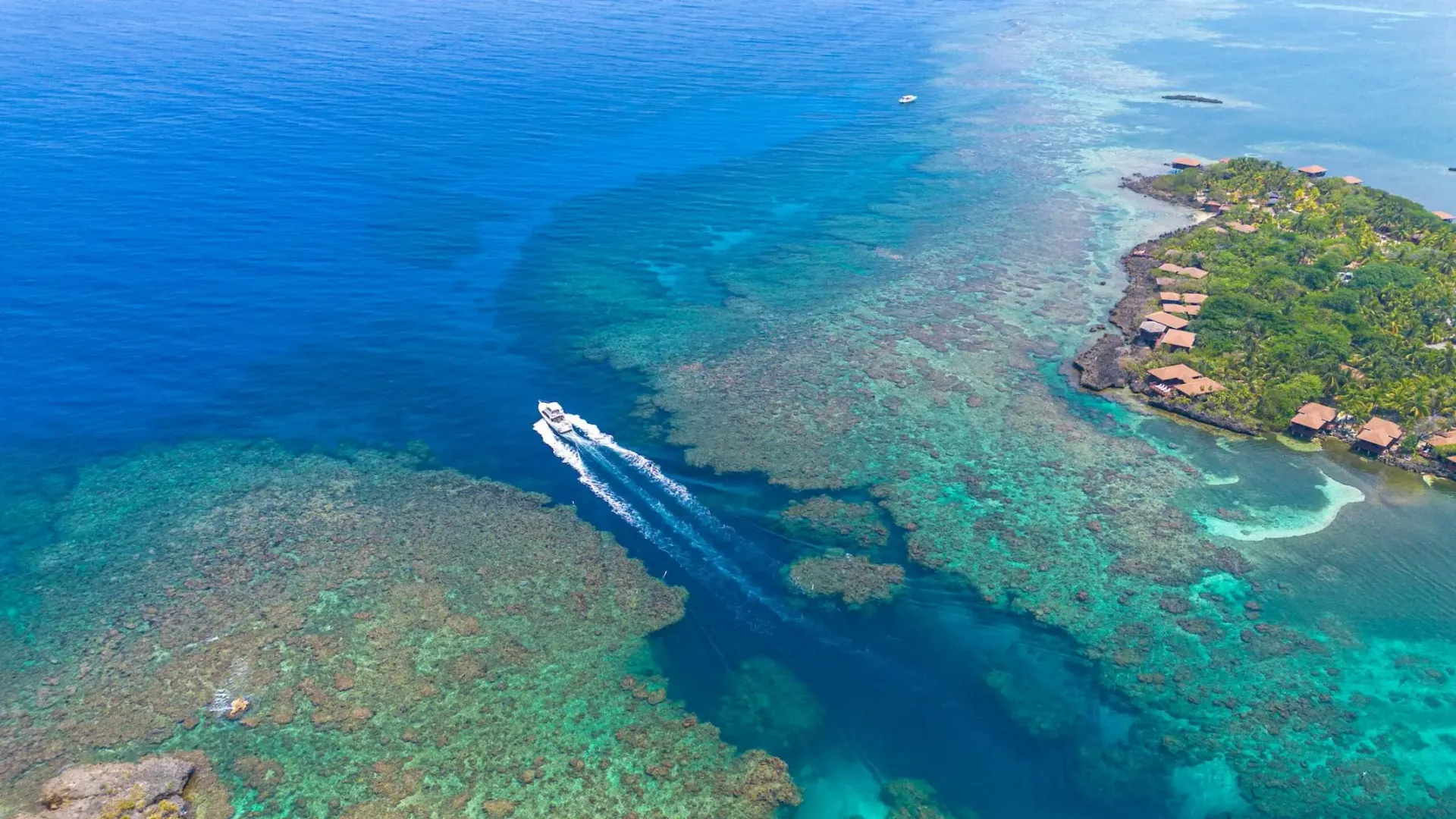
Aerial view of Roatan Honduras showing the reef system and deep blue offshore water near West End

Fishing in Roatan

Offshore, flats, and reef — three distinct fisheries accessible from West End. Species by season, what to target, and what to know before you book.

Plan Your Trip

The Fishery

An angler arriving in Roatan for the first time usually asks the same question: what exactly is the fishery, and what makes it worth the trip?

The answer starts with the reef. Roatan sits inside the Mesoamerican Barrier Reef, the second-largest reef system in the world. The reef runs along the island's south side and creates a sharp underwater topography: the shelf drops steeply off the western end, putting 1,000 feet of water within five miles of the West End dock. That depth is reachable in a 10-to-15-minute run.

The result is a fishery that spans three distinct environments accessible from a single base. Offshore blue water with pelagic species that change by season. Protected northwest flats for technical sight fishing year-round. And the reef itself, which holds resident bottom-dwelling species regardless of the time of year. Most destinations specialize in one or two of these environments. Roatan covers all three. View the full charter offer to see how each is structured.

Angler fighting a large offshore fish deep sea fishing out of Roatan Honduras

Offshore and Deep Sea Fishing

The offshore bite out of Roatan runs year-round, but the species in the water change significantly by month. The reef shelf makes the transition from dock to blue water fast — and by fast, that means lines in within 15 minutes of leaving West End.

Wahoo and Kingfish

Wahoo are the standout winter offshore target. Peak season runs November through February, with the strongest concentrations from December into January. Wahoo are built for speed: they attack a fast-trolled lure without warning and make a long initial run at over 40 mph. A 30-to-50-pound fish is realistic during peak months.

Kingfish school along the reef edge during the same November-to-February window. They respond well to live bait presentations and are a consistent half-day target when conditions line up.

Nov – Feb
Blackfin Tuna and Mahi-Mahi

From March through June, the offshore mix shifts to tuna and mahi-mahi. Blackfin tuna are available year-round but concentrate in the best numbers during spring. Fish in the 20 to 40 lb range are common, and they fight disproportionately hard for their size.

Mahi-mahi peak in the same March-to-June window. They are aggressive surface feeders that respond to trolling presentations and current-line activity. A productive weed line can produce multiple fish in quick succession.

Mar – Jun · Tuna Year-round

Big Game: Marlin and Sailfish

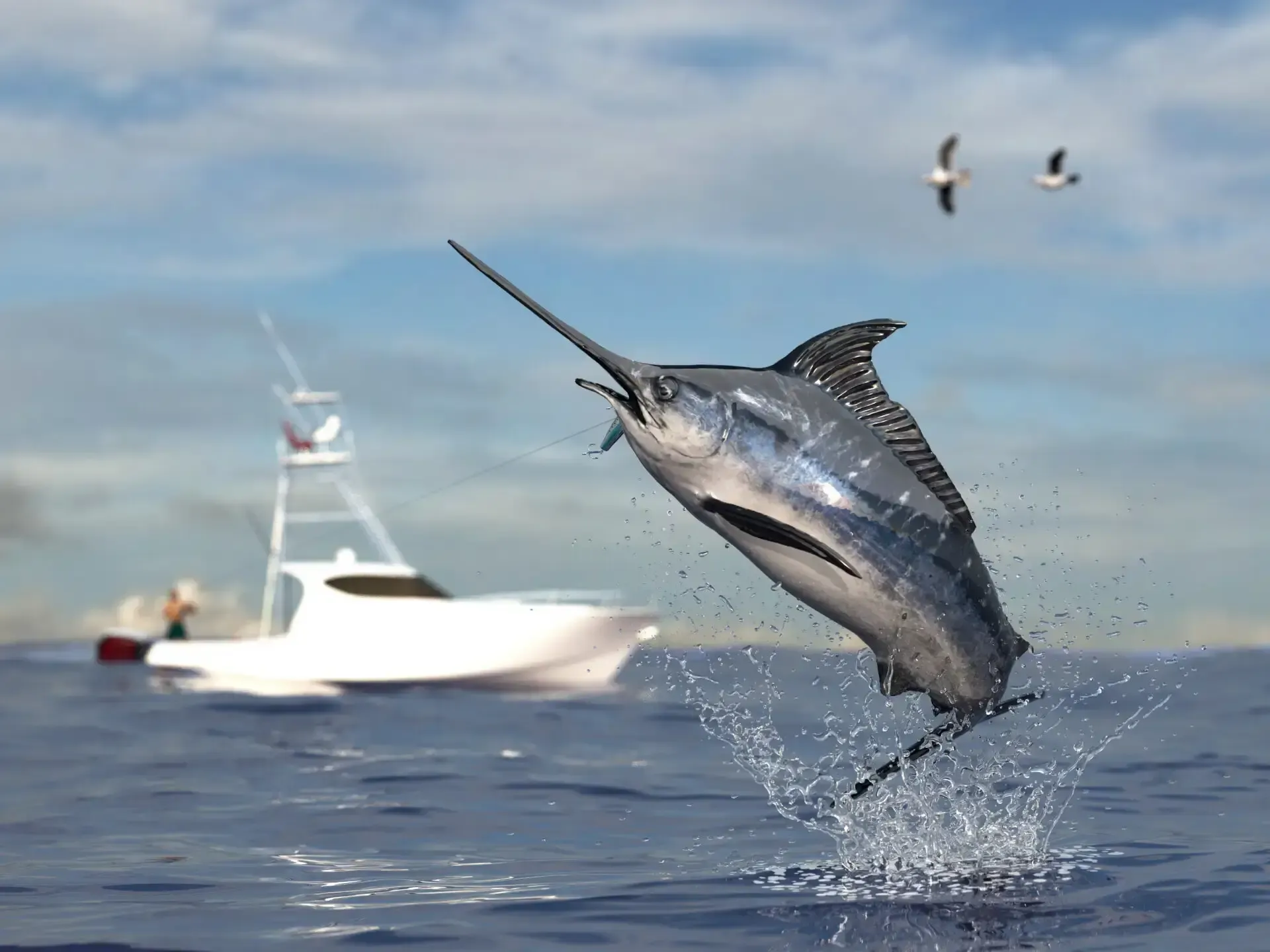
September through January is Roatan's big game season. Blue marlin are the primary target; white marlin and sailfish come through the same seasonal window. All three species are caught and released under IGFA rules.

The IGFA Roatan International Fishing Tournament runs each September 15th. Boat availability tightens during that week, so early booking matters. For full trip details, see the deep sea fishing charters out of West End.

Sep – Jan · Catch & Release

Fly Fishing and Flats

For fly anglers, the question is whether Roatan's flats are worth a dedicated day or worth building a trip around. The northwest flats answer that clearly.

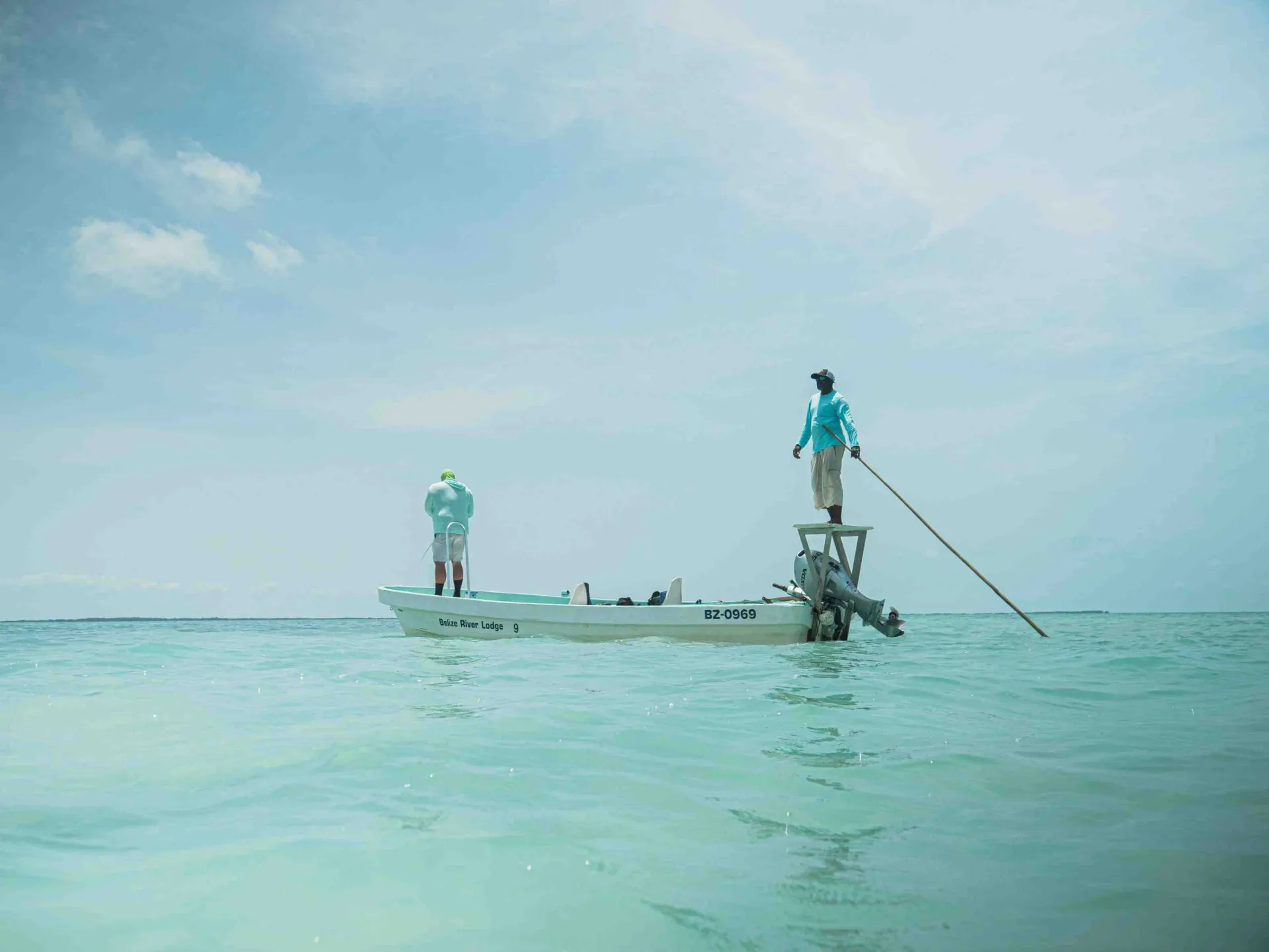
The flats around West End run over hard white sand bottom and turtle grass, the kind of structure that holds fish year-round and produces tailing activity on a moving tide. Visibility in the water column is good enough to spot fish at distance. The fishing here is technical: accurate presentations, reading feeding lanes, and understanding which species is in the water on any given tidal cycle.

Bonefish

Bonefish are the most accessible saltwater fly species and the most consistent target on Roatan's northwest flats. Average fish run 2 to 4 lbs, with larger specimens present in the right conditions. They tail actively on hard sand and respond to crab and shrimp patterns landed cleanly ahead of the fish and stripped with short, controlled pulls. Best numbers run October through April, but bonefish are catchable year-round.

Permit

Permit are the reason experienced fly anglers organize dedicated flats trips. They are selective feeders that spook easily from a poor presentation and refuse more often than they commit. The best window on Roatan's northwest flats runs November through April, when permit work the turtle grass edges on an incoming tide. A crab pattern placed accurately ahead of a moving fish, timed to fall within its feeding lane, is the standard approach. Accuracy matters more than casting distance.

Tarpon

Roatan holds juvenile and adult tarpon in the mangrove edges and tidal channels along the northwest coast. The most productive window runs April through August. Fish in the 10 to 40 lb range are the primary flats target; larger tarpon move through the cuts and deeper channels. They take streamer flies aggressively when water temperature is right and jump immediately on a tight line.

Guided fly fishing trips on the northwest flats are available as full-day sessions, structured around your target species or a Grand Slam attempt. All three species share the same water system across overlapping seasonal windows. A day structured to target all three — bonefish in the morning, permit on the incoming tide, tarpon in the channels before dark — is what fly anglers call a Grand Slam. It is possible here.

Roatan northwest flats from a fishing boat, clear turquoise water over white sand with mangrove edges in the distance

Reef Fishing

Not every angler wants to run offshore or wade the flats. For those who prefer structure fishing close to the reef, Roatan's bottom action is consistent regardless of the time of year. The Mesoamerican Barrier Reef supports a dense resident population of grouper, snapper, amberjack, and barracuda — species that hold on structure and respond to bottom rigs, jigs, and live bait.

Grouper

Red grouper and Nassau grouper are the primary targets around Roatan's reef structure. They hold tight to coral heads and ledges and respond well to bottom rigs and cut bait. Consistent action year-round and excellent table fish.

Year-round

Snapper

Multiple snapper species are present year-round, with the strongest concentrations in June. Yellowtail snapper and lane snapper are the most commonly caught; mangrove snapper hold in deeper structure. Light jigs and natural bait both produce.

Year-round · Peak June

Amberjack

Greater amberjack hold on deeper structure and drop-offs along the reef edge. They are powerful, fast fighters for their size and respond well to vertical jigging and live bait presentations. A 20-to-40-pound fish is a serious workout on medium tackle.

Year-round · Deep Structure

Barracuda

Present throughout the reef system year-round. Barracuda hit fast and hard on lures and baitfish imitations and are a reliable incidental catch on most reef trips. They add action to a session targeting grouper or snapper and are consistently present regardless of season.

Year-round

The Roatan Fishing Calendar

The table below covers every main target species by type, peak window, and key context. Use it to align your travel dates with the species you want to target.

Species Type Peak Window
Wahoo Offshore November – February
Kingfish Offshore November – February
Blackfin Tuna Offshore March – June
Mahi-Mahi Offshore March – June
Blue Marlin Offshore (C&R) September – January
White Marlin Offshore (C&R) September – January
Sailfish Offshore (C&R) September – January
Bonefish Flats Year-round
Permit Flats Year-round
Tarpon Flats / channels Year-round
Grouper Reef Year-round
Snapper Reef Year-round
Amberjack Reef Year-round
Barracuda Reef Year-round

Fishing from West End

The practical question for any multi-style fishing trip is which base gives the best access to the most water. West End sits on the western tip of Roatan, placing it at the intersection of all three fishing environments.

The offshore drop is a short run. The northwest flats are accessible in minutes. The reef is reachable from the dock year-round. For an angler planning an offshore day followed by a flats session — or covering multiple species across a week — West End eliminates the transit time that makes other parts of the island less efficient as a base.

For anglers who want to push beyond Roatan's waters, multi-day charters to the Swan Islands are available as a premium add-on. The Swan Islands are a remote Honduran archipelago positioned above the Cayman Trench, roughly 100 nautical miles north of Roatan. Yellowfin tuna, sailfish, blue marlin, and undisturbed flats are the targets. It is a significant commitment: multi-day offshore with no marinas, no crowds, and no other boats. It represents the outer edge of what a charter operation based in West End can offer.

Charter fishing boats moored at West End dock in Roatan Honduras at early morning before departure

What to Know Before You Go

A few facts that regularly surprise anglers planning their first trip to Roatan.

No fishing license required.

Honduras does not require a recreational fishing license for visiting anglers. This applies to all charter fishing out of Roatan — no paperwork, no advance applications, no fees at the dock.

Marine park rules apply.

The entire island is a designated marine park. Spearfishing and sling fishing are prohibited without permits, and certain reef zones are restricted for conservation purposes. A licensed guide navigates these boundaries as a standard part of every trip.

All billfish are catch-and-release.

Blue marlin, white marlin, and sailfish are not kept under any circumstances. All big game charters operate under IGFA catch-and-release rules. This is a destination-wide standard, not a charter-by-charter policy.

Travel from the US is direct.

Roatan International Airport (RTB) has non-stop flights from Houston, Miami, and Atlanta. No visa is required for US, Canadian, EU, or UK nationals for stays under 90 days. US dollars are widely accepted alongside the Honduran lempira. West End is a 20-minute taxi ride from the airport.

For trip-specific questions about target species, timing, or which fishing style fits your visit, send an inquiry. We respond same-day during peak season.